
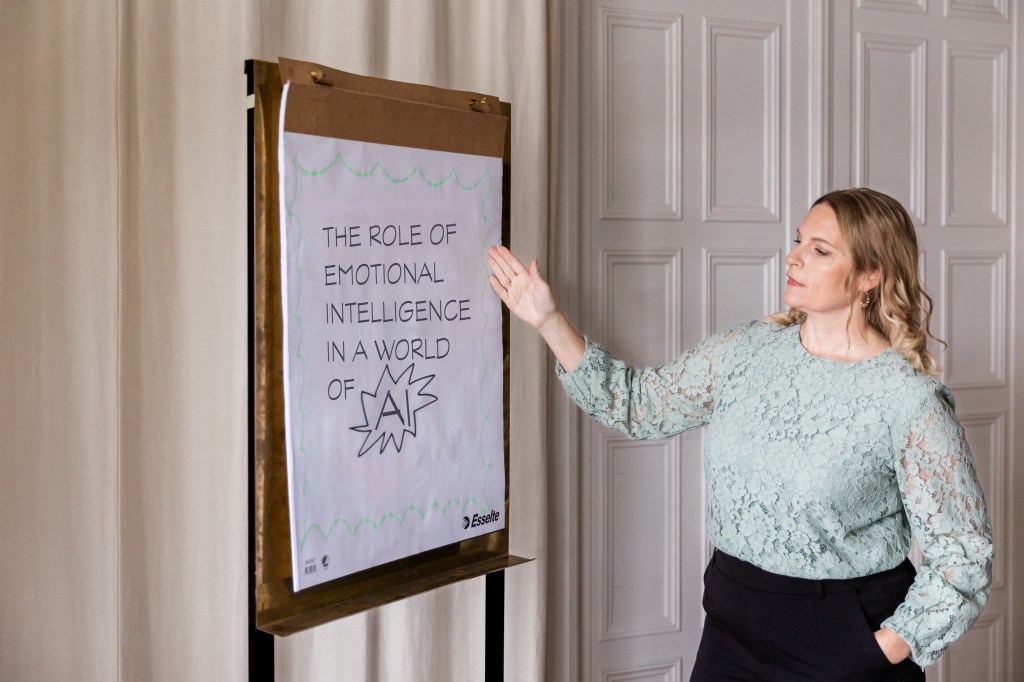
At the beginning of this year, I had an insightful conversation with the inspiring Bodil Jonason about the critical role of Emotional Intelligence (EI) in a world increasingly dominated by Artificial Intelligence (AI). During our discussion, Bodil highlighted the Future of Jobs Report from the World Economic Forum (WEF), which had just been released a few weeks earlier. This report made an important point: skills like empathy and active listening are projected to be critical by 2030, and these are areas where generative AI (GenAI) is likely to have limited substitution.
The report intrigued me, and since then, I’ve found myself reflecting on it frequently. I highly recommend that you take a deep dive into it to better understand the future of work. It sheds light on some profound shifts that are already in motion and offers a framework for planning the skills we will need to thrive in the future.
AI Skills Needed, Yet Evolving
It will come as no surprise that AI skills are going to be essential in the coming decade. However, what stood out to me in the report was the recognition that many of the AI skills we think of today – such as using generative AI tools – will themselves be automated. The WEF forecasts that by 2030, a significant proportion of jobs requiring AI skills, such as programming and data management, will be taken over by GenAI. While this raises important questions for the future of various industries, it also presents an opportunity for us to reframe how we view skills development in the workplace.
As technology evolves, we need to consider which areas are likely to remain human-centric and which will become automated. For example, areas like reading, writing, mathematics, systems thinking, and marketing are among those already being heavily impacted by automation, with GenAI starting to take over routine tasks. But does that mean our roles are at risk? Not entirely.
Essential Future Skills Across Industries
Take marketing and media, the fields I’ve been deeply involved in for the past 20 years. The WEF report outlines that, indeed, many of the tasks within marketing will increasingly be carried out by GenAI – such as content generation, data analysis, and even customer targeting. The shift is already underway, and it’s undeniable that many marketers and agencies are already feeling its effects. While the changes might feel overwhelming, resisting this transformation is unlikely to lead to long-term success.
Instead, the key question we need to ask is: What skills should we develop to remain relevant and valuable in this new era? The WEF report suggests that while some technical aspects of marketing may be automated, there are numerous human-centered competencies that GenAI cannot easily replace. These are the skills that will remain in demand in the future and will set leaders apart.
Below are some critical skills that you may want to focus on cultivating, no matter if you are a marketer or a leader in another area:
- Empathy and Active Listening: The ability to understand and respond to human emotions remains a uniquely human skill, essential for leadership, customer relations, and team dynamics.
- Environmental Stewardship: As sustainability remains a critical area, leaders who can navigate and drive environmental initiatives will be crucial.
- Creative Thinking: While GenAI can generate ideas, the ability to think outside the box and apply creativity to real-world problems will continue to be a vital skill.
- Teaching, Mentoring, and Coaching: People development and nurturing others’ growth require emotional intelligence, patience, and personal insight, which AI cannot replicate.
- Resilience, Flexibility, and Agility: These traits are becoming even more important as we face an ever-changing landscape. The ability to adapt, pivot, and thrive amidst uncertainty is a crucial skill for the future.
- Analytical Thinking: While AI can analyze data, human intuition and the ability to draw meaningful conclusions from that data will continue to be important.
- Leadership and Social Influence: Effective leadership requires empathy, relationship-building, and influencing others to drive change – all areas where human qualities still outperform machines.
Building Emotional Intelligence and Leadership Skills
The future is indeed full of transformation, and as we look ahead, emotional intelligence and leadership abilities will be more critical than ever. If you’re interested in strengthening these skills, then I’d love to help you get started.
I offer clarity calls where we can explore your specific goals and challenges. Together, we’ll assess areas like self-perception, decision-making, stress management, and more. We’ll also create a personalized plan to help you navigate the evolving landscape of work with confidence and resilience.
Are you ready to embrace the future of work, or are you uncertain about which skills you should focus on? Let’s talk about how you can develop the emotional intelligence and leadership capabilities that will position you for success in the age of AI.
Learn & Lead the Way,
Frida

Leave a comment