
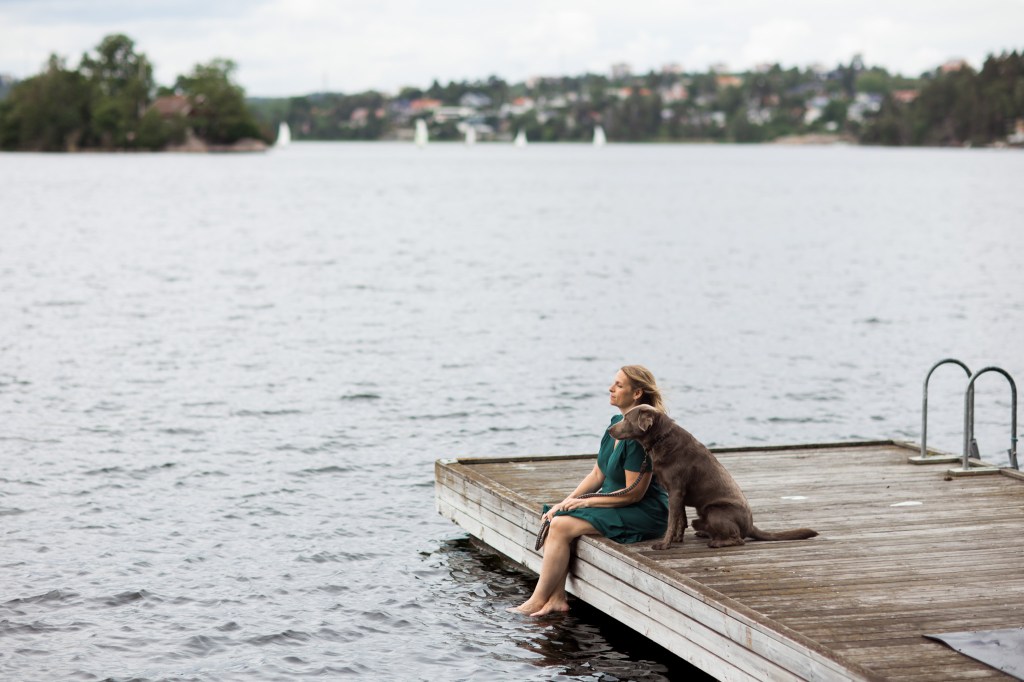
I’ve just returned from three weeks of holiday in the Swedish countryside. Think green forests, countless lakes, morning yoga, daily fika, but also painting the house, feeding the family, and fighting off mosquitoes. Honestly, family holidays have it all 😉.
In Sweden, three weeks off isn’t considered a long break, it’s barely standard. Most people take at least four consecutive weeks, often longer if they have young children. Many businesses shut down entirely during July. Email auto-replies are not apologetic.
The same holds true in Italy, Spain, and France, where August is sacred. Ever tried to schedule a meeting in Paris mid-August? Bonne chance.
In contrast, when I lived and worked in the UK and Germany, taking more than two weeks off often felt like a quiet act of rebellion. Even though people technically have the vacation days, the cultural norm leans more towards multiple short breaks than one long holiday.
🧠 What Happens When Leaders Disconnect?
The way we approach holidays is not just a cultural trait, it’s a reflection of how we lead.
Leaders who take extended time off (at least two weeks, fully unplugged) tend to return with sharper thinking and greater emotional resilience. According to research, they show higher cognitive flexibility, the ability to switch perspectives, think creatively, and solve problems in new ways (American Psychological Association, 2022). They also demonstrate improved emotional regulation, essential for navigating complexity, uncertainty, and interpersonal dynamics (Harvard Business Review, 2020).
Perhaps even more compelling: it’s not just the leader who benefits. Teams led by individuals who take proper time off often report increased autonomy, problem-solving capability, and confidence in decision-making during their absence (Center for Creative Leadership, 2021). In other words, the leader’s absence becomes an opportunity for others to step into leadership themselves.
🧨 Myth to Break: “Great Leaders Are Always Available”
Let’s reframe that:
If your team can’t function without you, you haven’t built a team – you’ve built a dependency.
Real leadership means creating systems and growing people in ways that allow the organisation to breathe, evolve, and thrive – even when you’re not there.
Detachment isn’t a sign of weakness or disengagement. It’s an act of trust. It also sends a powerful message: that rest is not only acceptable, but essential.
Of course, there are situations when a leader needs to be available and I’ve personally developed a structure that works for me. If something major is happening (and then I mean really burning and important), then I’ll agree in advance when and how I might be involved. But I no longer default to availability. I default to trust.
⏳ Does the Length of Your Break Matter?
Yes and significantly. Research shows it takes 7 to 10 days just to mentally detach from work (Sonnentag & Fritz, 2021). So if you’re only taking a one-week break, you might spend half that time just unwinding—and never reach the full benefits of recovery.
Here’s a quick breakdown of different types of time off:
- Microbreaks (1–3 days): Great for short-term mood boosts and quick recovery, but offer minimal long-term benefits.
- Fragmented leave (1 week here and there): Provides moderate rest, but detachment is often incomplete, it’s harder to fully unplug.
- Extended leave (2–4+ weeks): Supports deep cognitive recovery, restores insight, and resets emotional capacity. It also requires strong delegation and trust in your team.
If we want access to higher-level thinking, more grounded leadership, and long-term effectiveness, we need to design holidays that go beyond surface-level rest.
🌍 Holiday Is a Privilege – But Not Taking One Can Be a Problem
Wherever you live – Sweden, the UK, Germany, France, or beyond – holiday culture shapes how we lead. But ultimately, detachment isn’t about geography. It’s about mindset.
We can’t expect innovation, resilience, or creativity from organisations that don’t make space for recovery. And that space starts with leaders who model the way.
“The greatest breakthroughs often happen in the space between effort and stillness.”
– Anonymous
🪞 A Short Reflection
Could your team run smoothly without you for two or three weeks? If not, what needs strengthening – your systems, your trust, or your mindset?
And when you return, would your team feel more empowered than when you left?
🔁 Over to You
💬 What’s the longest break you’ve taken in recent years? 🧭 Could you confidently step away for three weeks or more? 🌱 What would need to shift for that to feel possible?
Let’s start normalising rest not as a reward, but as a leadership responsibility.
📚 References
American Psychological Association. (2022). Rest and mental agility. https://www.apa.org/news/press/releases/2022/03/rest-mental-health
Center for Creative Leadership. (2021). Leadership in your absence: Building stronger teams through strategic detachment.
Harvard Business Review. (2020). Why great leaders need to recharge. https://hbr.org/2020/07/why-great-leaders-need-to-recharge
Sonnentag, S., & Fritz, C. (2021). Recovery from job stress: The stressor-detachment model as an integrative framework. Journal of Organizational Behavior, 42(S1), 196–214.

Leave a comment